A surgeon’s perspective with a real patient experience
If you are searching for hernia treatment in Kurnool, it is important to recognize early symptoms
and understand the latest options such as laparoscopic hernia surgery. A hernia often starts as a
small, painless bulge in the groin or abdomen—but without treatment, it can gradually worsen and
sometimes turn into an emergency.
Real patient story from Kurnool: when a small swelling becomes an emergency
Ramesh, a 46-year-old shop owner in Kurnool, noticed a small groin swelling while lifting cartons at
work. There was no pain at first. The bulge was more obvious after standing for long hours and
reduced when he lay down—typical of an inguinal hernia.
Like many patients, he ignored it because it seemed harmless.
Over the next few months the swelling slowly increased. Then one day, after a bout of coughing, he developed severe pain and vomiting. The lump became hard and would not go back in.
He was brought to Ashwini Hospital and diagnosed with a complicated (strangulated) hernia, which
required emergency surgery.
This is exactly why surgeons recommend early consultation: planned hernia repair (often
laparoscopic) is usually simpler than emergency surgery.
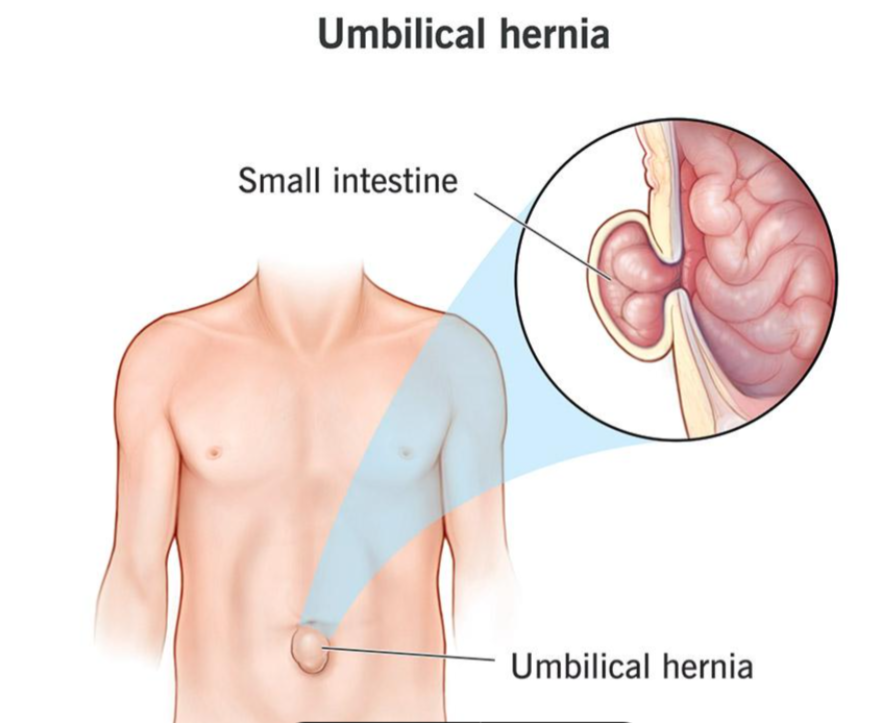
What is a hernia?
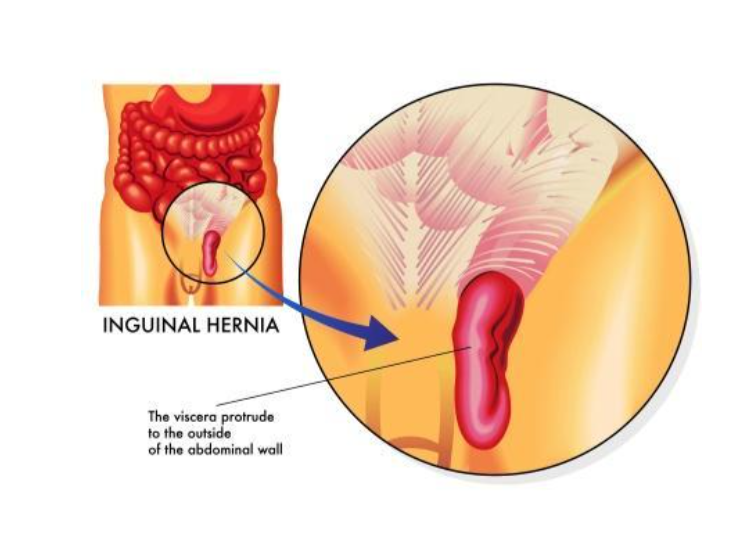
A hernia happens when an internal organ (commonly the intestine) pushes through a weak spot in
the abdominal wall muscles.
You can think of it like a weak spot in a tyre: as pressure builds, a bulge appears at the weakest
point.
A hernia does not heal on its own and usually becomes bigger over time, which is why early
evaluation matters.
What causes a hernia?
A hernia usually develops due to a combination of muscle weakness and increased abdominal
pressure. Common risk factors include:
- Heavy lifting or strenuous activity
- Chronic cough (smoking-related cough, COPD, etc.)
- Constipation and straining during stools
- Obesity and weight gain
- Pregnancy
- Previous abdominal surgery (risk of incisional hernia)
Hernia symptoms: early signs you should not ignore
The most common hernia symptom is a swelling or lump. Depending on the type of hernia, it may
appear in the groin, around the navel, or near a previous surgical scar. If you notice any new bulge,
an early check-up helps confirm whether it is a hernia and plan treatment before complications.
- In the groin (inguinal hernia)
- Around the navel (umbilical hernia)
- Near a previous surgical scar (incisional hernia)
Typically, the swelling:
- Appears on standing or straining
- Increases while coughing
- Reduces or disappears on lying down
Many people ignore this stage because it may be painless. In reality, this is the best time to treat a
hernia in a planned and simple way.
Pain or discomfort
Initially, a hernia may not cause pain. However, as it progresses, patients begin to notice:
- Discomfort while lifting weights
- Pain during coughing or straining
- A feeling of heaviness
If pain starts, it doesn’t mean the hernia is improving. It usually means the defect is getting larger or
The tissues are being strained more.
Increase in size over time
One important fact every patient should understand:
A hernia does not reduce in size on its own.
It may remain small for some time, but eventually:
- The defect widens
- The swelling enlarges
- Symptoms worsen
Delayed cases are often more complex to treat and may require more extensive surgery.
Strangulated hernia warning signs (medical emergency)
Certain symptoms indicate serious complications:
- Suddenly, severe pain
- Swelling is becoming hard and tender.
- Inability to push the swelling back
- Redness over the swelling
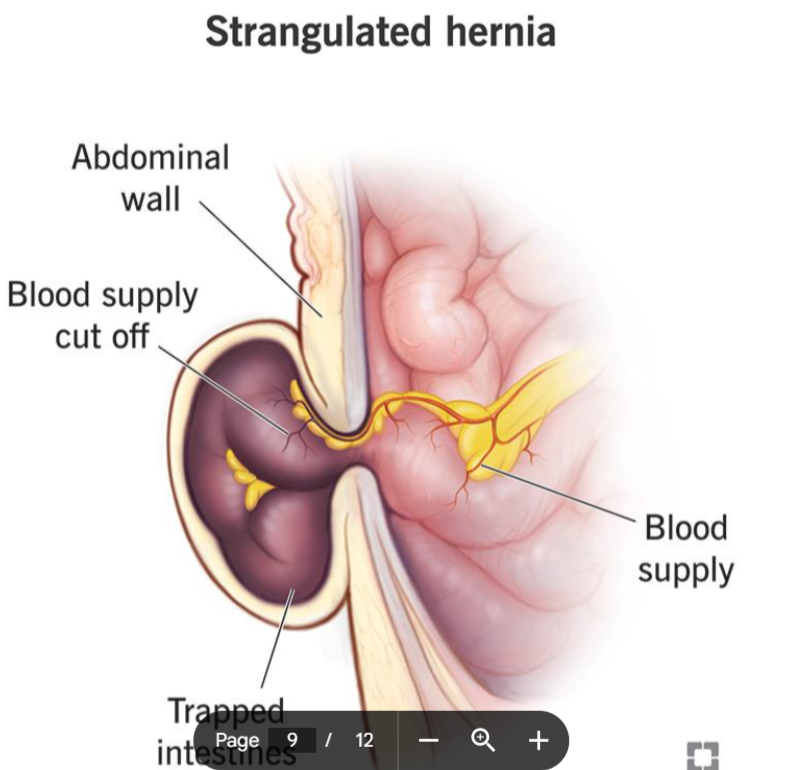
These signs may indicate a strangulated hernia, where the blood supply to the intestine is
compromised.
This is a surgical emergency. If these symptoms occur, do not wait—seek immediate medical care.
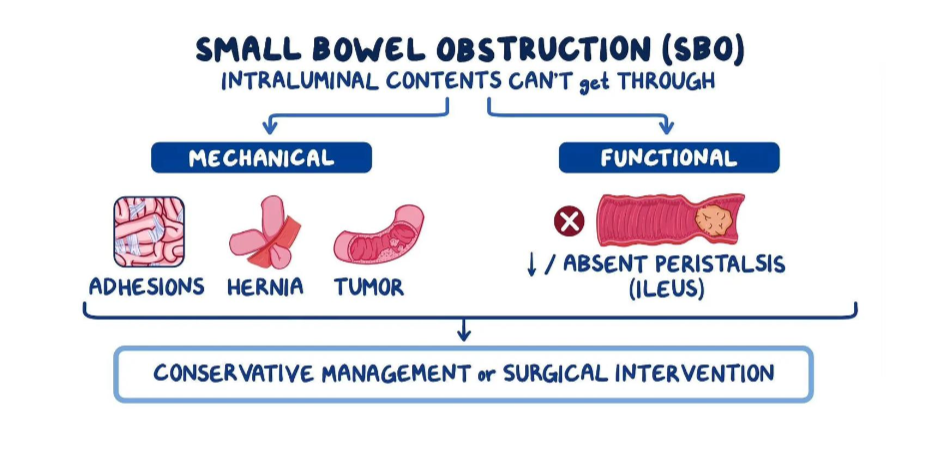
When the intestine gets involved
In advanced cases, patients may develop:
- Vomiting
- Abdominal bloating
- Constipation or inability to defecate
This suggests intestinal obstruction, which requires urgent medical attention.
It is important not to mistake these symptoms for simple gastric issues.
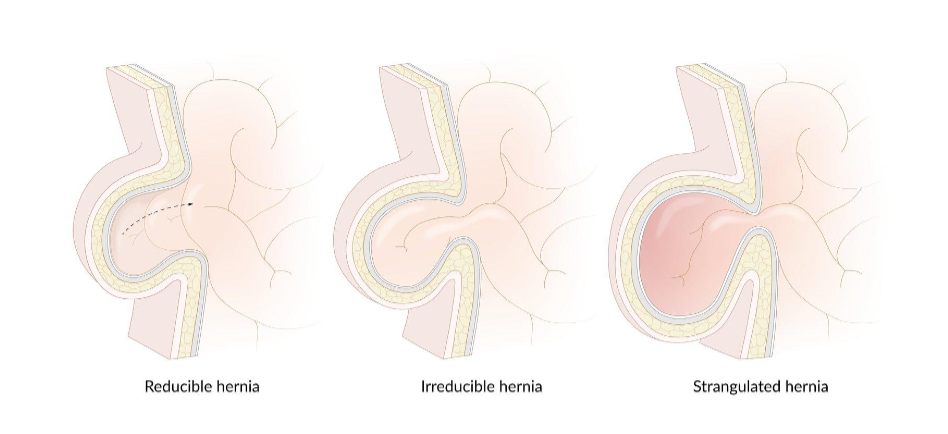
Irreducible hernia: a high-risk stage
In early stages, the swelling can usually be pushed back inside (a reducible hernia). If it remains
outside and cannot be reduced, it is called an irreducible hernia. This stage carries a higher risk of
strangulation and should not be delayed.
Why early treatment matters
From a surgical perspective, timing makes a significant difference. Early-stage hernias are usually
smaller and easier to repair. When treatment is delayed, the defect becomes larger and the chance
of complications increases.
Early vs late presentation: what changes?
- Early-stage hernia: smaller defect, simpler surgery, quicker recovery
- Late-stage hernia: larger defect, higher risk of obstruction/strangulation, possible
- emergency surgery, longer recovery
The difference between a planned procedure and an emergency operation is significant—and it is
one of the main reasons doctors recommend early repair.
Hernia treatment options in Kurnool
The definitive treatment for most hernias is hernia surgery. Today, surgeons commonly perform
either laparoscopic (keyhole) hernia repair or open hernia repair, based on the hernia type, size,
previous surgeries, and the patient’s overall health.
Laparoscopic repair is often preferred because it may offer:
- Smaller incisions
- Less postoperative pain
- Faster return to normal activity
- Lower recurrence rates
For most patients, this approach offers a safe and efficient solution, especially when done early.
Can a hernia be treated without surgery?
No. Medicines cannot repair the muscle weakness that causes a hernia. Hernia belts may provide
temporary support, but they do not cure the condition. For a permanent solution, surgical repair is
required.
A practical message to patients
Hernias typically do not improve with time. If you notice a swelling—especially one that changes
with standing, coughing, or lifting—get it evaluated early, even if it is not painful.
Planned treatment is usually simpler and safer than waiting for complications. The absence of pain
does not mean the problem has gone away.
Recovery after hernia surgery
Recovery depends on the type of operation and your overall health. In general, after laparoscopic
hernia surgery, many patients can return to routine activities relatively quickly.
- Walking: often the same day or the next day
- Routine daily work: usually within a few days (as advised)
- Heavy lifting/gym: typically after a few weeks, based on your surgeon’s guidance
When should you consult a doctor?
Consider a medical evaluation if you notice:
- Any swelling in the abdomen or groin
- Pain or discomfort while lifting or coughing
- Increase in size of swelling
- Persistent heaviness or burning sensation
- Seek immediate attention if:
- Pain becomes severe
- Swelling becomes hard
- Vomiting or constipation develops
Conclusion: early action prevents emergency
Hernia is a common but often neglected condition. Early symptoms can be mild and manageable,
but delay may lead to serious complications. Timely consultation allows accurate diagnosis, planned
treatment, and better outcomes.
Hernia specialist consultation in Kurnool
If you are looking for a hernia surgeon in Kurnool or want to discuss laparoscopic hernia surgery,
you can consult at Ashwini Hospital for evaluation and treatment planning.
Dr. Suresh Reddy
Surgical Gastroenterologist & Laparoscopic Surgeon
FAQ's
Can a hernia heal without surgery?
No. A hernia does not close on its own. Surgery is the definitive treatment.
Is hernia surgery safe?
Hernia surgery is generally safe when performed by an experienced surgeon, especially when done
early before complications develop.
How long is recovery after hernia surgery?
Many patients resume routine activities within days, especially after laparoscopic repair. Your exact
recovery plan depends on the hernia type and your surgeon’s advice.